
As an avid player who has spent considerable time in the vibrant world of Infinity Nikki, I've come to appreciate the complex systems that turn even duplicate items into valuable resources. The game's gacha mechanics, including the Resonance banners and the Surprise-O-Matic machine, inevitably lead to accumulating numerous clothing duplicates. Initially, these repeats might seem like disappointments, but I've discovered they're actually essential components for character progression and customization. The key is understanding how to transform these seemingly redundant items into powerful assets for outfit evolution and material acquisition.
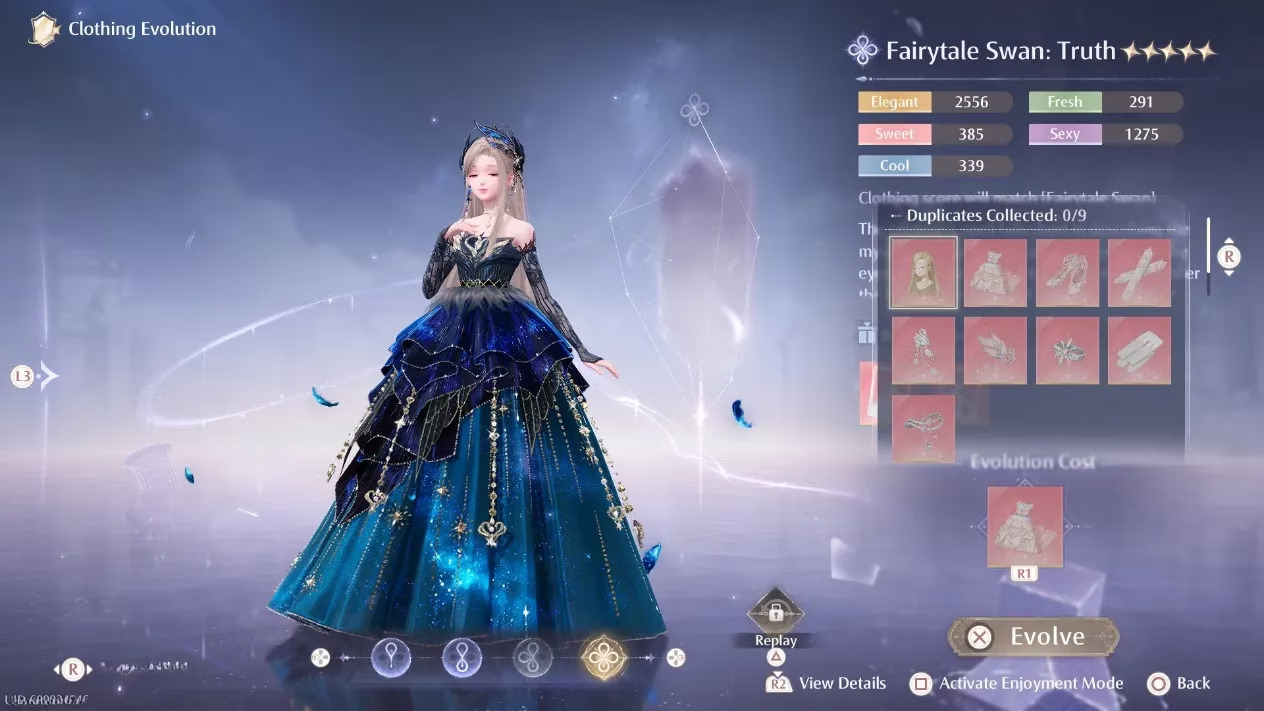
The most critical use for duplicate clothing, I've found, is evolving outfits to their maximum potential. Each outfit in the game has multiple evolution stages, with higher-star outfits requiring more duplicates to reach their final forms. For instance, the coveted 5-star outfits from the Distant Sea banner feature three distinct evolution stages, with the final transformation demanding complete duplicate sets. This system creates an interesting strategic layer where players must decide whether to immediately recycle duplicates or save them for future evolution projects. I've learned to carefully examine my wardrobe and plan which outfits I want to prioritize for evolution based on my playstyle and aesthetic preferences.
When I first started playing, I made the mistake of immediately recycling duplicates without considering their evolution potential. Now, I maintain a detailed inventory spreadsheet to track which outfits I'm actively evolving and which duplicates I should preserve. The evolution process not only enhances the visual appearance of outfits but also significantly boosts their statistical benefits, making evolved clothing essential for tackling more challenging content. This system encourages players to engage with specific banners repeatedly while providing tangible rewards for their dedication.
Beyond evolution, duplicate clothing serves another vital purpose through the recycling system. Once players unlock the appropriate feature, they can exchange unwanted duplicates for Glitter Bubbles—specialized materials used for the final glow-up enhancement on Level 10 clothing items. What makes this system particularly interesting is the strategic choice involved: there are five different types of Glitter Bubbles corresponding to different clothing attributes:
-
Elegant Glitter Bubbles for sophisticated styles
-
Fresh Glitter Bubbles for lively, vibrant outfits
-
Sweet Glitter Bubbles for cute, charming designs
-
Sexy Glitter Bubbles for bold, alluring pieces
-
Cool Glitter Bubbles for edgy, fashionable items
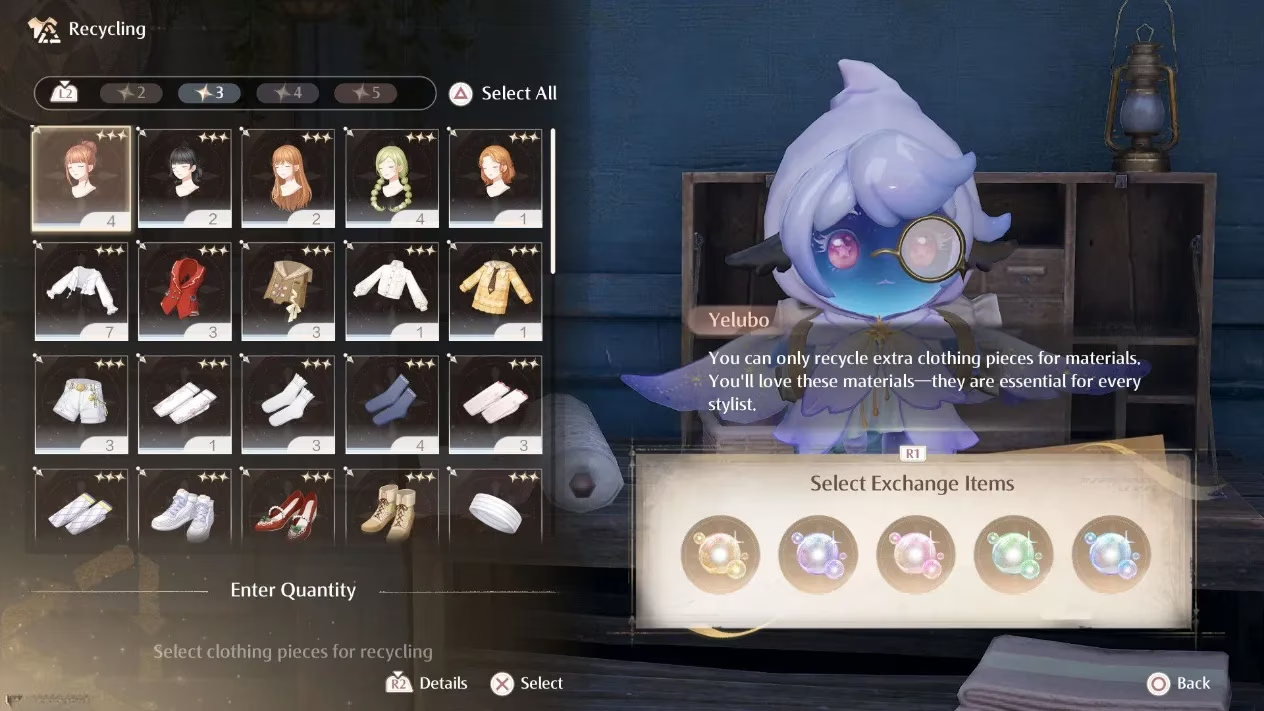
Unlocking the recycling feature requires specific progression milestones that I initially found challenging but ultimately rewarding. The process involves reaching Mira Level 31, which serves as the gateway to advanced game systems. For players struggling with this requirement, focusing on daily quests, story progression, and event participation provides the most efficient path forward. Once Mira Level 31 is achieved, players must complete a Caged Greed Trial in the Realm of the Dark—a challenging but manageable task that introduces important game mechanics.
The subsequent steps involve checking messages from Dada in the Pear-Pal's Friends app, specifically looking for the "Outfit Recycling" notification. This message signals the arrival of a new Faewish Sprite named Yelubo near the Great Wishtree in Florawish. Speaking with Yelubo opens the Recycling menu, where players can select duplicates for exchange and choose their preferred Glitter Bubble type. I appreciate how this system transforms potential frustration into strategic decision-making, allowing players to customize their material acquisition based on their current needs.
Based on my experience, here are the most effective strategies for managing duplicate clothing in 2026:
-
Prioritize Evolution Materials: Always check if a duplicate belongs to an outfit you're actively evolving before considering recycling.
-
Balance Immediate vs. Future Needs: Weigh the value of immediate Glitter Bubbles against potential future evolution requirements.
-
Specialize Your Glitter Bubble Collection: Focus on acquiring specific Glitter Bubble types that match your most-used clothing attributes.
-
Monitor Banner Schedules: Plan your duplicate acquisition around upcoming banners featuring outfits you want to evolve.
-
Participate in Events: Special events often provide bonus materials or increased duplicate drop rates.
The game's developers have continued refining these systems, with recent updates introducing quality-of-life improvements to the recycling interface and evolution tracking. In 2026, players benefit from enhanced visual indicators showing which duplicates are needed for active evolution projects and smarter recommendations for recycling decisions. These improvements demonstrate the developers' commitment to making duplicate management more intuitive and rewarding.
What I find most compelling about Infinity Nikki's approach to duplicates is how it transforms potential disappointment into engaging gameplay systems. Rather than simply discarding unwanted items, players engage in meaningful strategic decisions about resource allocation and progression planning. This design philosophy extends throughout the game, creating a satisfying loop where every acquisition—even duplicates—contributes to long-term progression. As the game continues to evolve with new outfits and systems, mastering duplicate management remains essential for any serious player looking to maximize their wardrobe's potential.
Comments